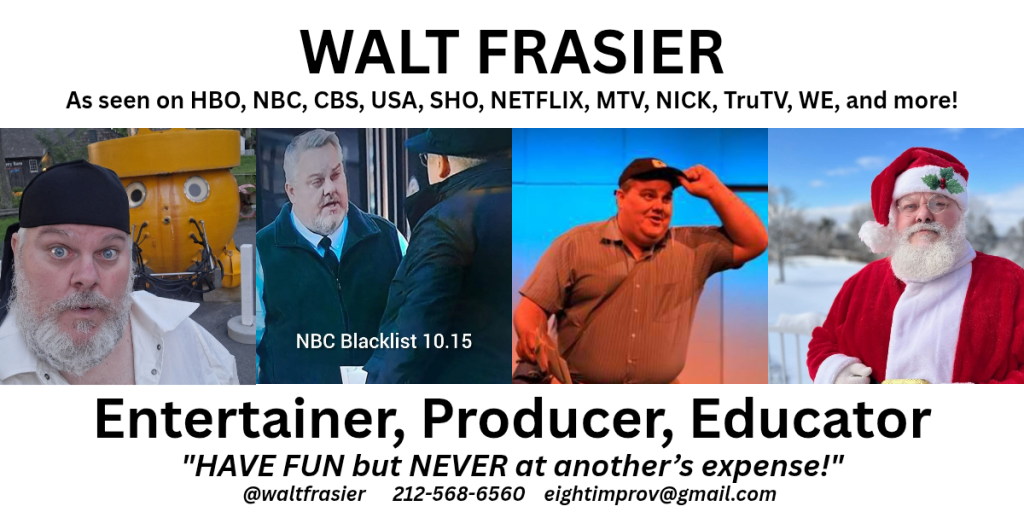
Every theater conservatory in America sells a version of the same script: move to New York, audition relentlessly, land the coveted contract, and wait for gatekeepers to grant career longevity. For most who pursue it, the reality is a quick attrition rate against punishing economics.
For Walt Frasier, the survival strategy looked less like traditional industry patience and more like an exercise in aggressive adaptability.
Arriving in New York in the late 1990s with classical vocal training and ambitions aimed at major lyric stages, Frasier encountered the standard crossroads of the working actor. The path forward wasn’t forged by waiting on institutional approval, but by seizing pragmatic opportunities. Together with his wife, Laurice, the pivot toward live comedy wasn’t born out of an early devotion to the improv clubhouse scene, but as a deliberate mechanism to create viable, steady performance work in the city without being bound to low-paying regional tours.
What emerged over the subsequent two decades was an operation that diverged sharply from standard comedy troupe models. Rather than forming an insular ensemble of performers sharing the same comedic reference points, the company was structured like a commercial Off-Broadway production. Frasier recruited diverse performers across disciplines—musical theater, opera, dance, and traditional acting—and applied the structural disciplines of directing and musical conducting to spontaneous comedic performance.
The distinction paid dividends in durability. While midtown comedy outfits and black-box theaters routinely shuttered under shifting commercial pressures, Frasier approached the market through operational agility. When conventional booking avenues stalled, he pivoted toward corporate training, school residencies, and self-produced touring dates. When the pandemic halted live performance in March 2020, the company didn’t pause; by that August, they had logged enough remote performance hours to publish an operational framework on adapting the discipline to virtual platforms.
Underpinning the hustle is a straightforward pedagogical philosophy that bridges the stage and the corporate seminar. For Frasier, the fundamental skills of the stage—listening, ensemble support, and stripping away fear-based insecurity—are not artistic luxuries. They are functional, utilitarian tools for navigating professional survival.
In an industry defined by structural precarity, Frasier hasn’t relied on gatekeepers to define his footprint. He simply built an enterprise out of the work itself.
 Walt Frasier