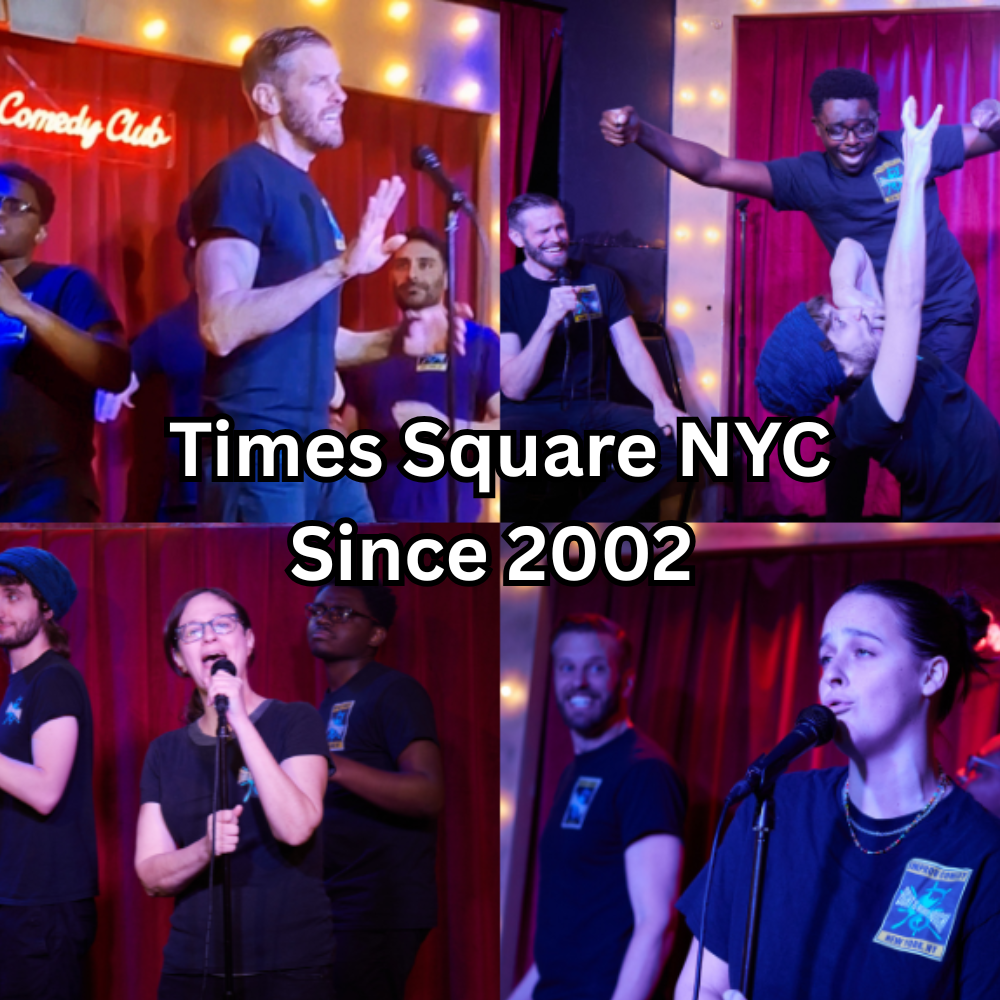
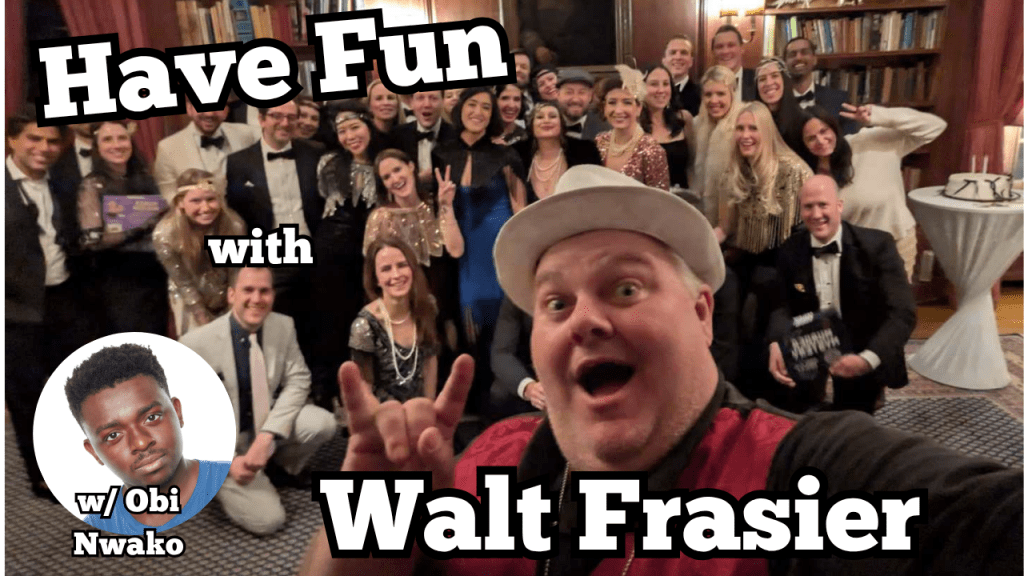
I got to sit down with Steven Prestia to discuss acting, improv, career, past & future and so much more…. Join Steven and I, with Laurice, Liz & Evan at 2pm, Saturday, April 11, 2026 at the South Shore Craft Brewery, Ocean Side NY GET TICKETS
ANOTHER PODCAST? WHY?
My mission in 2026 is to knock stage fright of the top of the phobias list. We do this spreading joy & laughter one show / workshop at a time while teaching invaluable life skills. We have public shows weekly in Times Square NYC and tour schools, theaters, community centers and corporate / private events DC to Boston almost daily. https://newyorkimprovtheater.com/ https://improv4kids.com/
Steven Prestia
Steven Prestia is a recent graduate from LIU Post with a BFA in Arts Management and an MBA. Steven hopes to use his arts management education to further his own comedy career. Steven has been working with 8 is Never Enough Improv since 2012. He started as a student, then became an Intern and worked his way up to Teacher/ Cast member in 2016. Steven has worked with various improv troupes on Long Island to include Friday Night Face Off and No Control. Steven is also a stand-up comedian and has performed at various venues across Long Island and New York City. Some of his credits include Caroline’s on Broadway, Governor’s, McGuire’s, Gotham Comedy Club, and the Broadway Comedy Clubs.
Walt Frasier https://waltfrasier.net/ Entertainer – Producer – Educator – Author For 30+ years Walt Frasier has been entertaining audiences live from Times Square NYC, Touring Nationwide, and occasionally popping onto their TVs and other devices. For casting Walter in SAG AFTRA Film, TV & Commercial projects, contact (Jaime) Baker Management. International credits include TV, Commercials, Theater, Music & Comedy. Currently the Artistic Director of the NEW YORK IMPROV THEATER and North East Managing Director for THEY IMPROV.
Having Fun with Walt Frasier: Transcript
Have Fun with Walt Frasier
Host: Walt Frasier
Guest: Steven Prestia
Date: Recorded April 10, 2026
WALT: Welcome back to Have Fun with Walt Frasier. I am Walt Frasier, and I am here today with a very special guest. Please introduce yourself!
STEVEN: How you guys doing? My name is Steven Prestia. I am a Long Island-based comedian and improviser. I’ve been doing improv now for 14 years, which is crazy to say. I’ve been a member of Eight Is Never Enough and working with you, Walt, since about 2012. I became an intern in 2016 and then a full-on teacher and cast member in 2017. In my college improv troop, No Control, I was the casting director. I’m also part of Long Island’s longest-running improv troop, Friday Night Face Off, which I’ve been with for about a decade. They call me “Steven The Voice Prestia,” which we’ll get into with some impressions later. I’ve also been an instructor for the LOLOPITAS company for the better part of a year. And fun fact: I’m a black belt in Kempo Karate!
WALT: There you go—the comedian and the bouncer! They pay me for multiple roles, and they can pay me well at those kinds of clubs. So tell me, you were with me early on, but before that, you were with the Gotham Kids classes doing stand-up, right?
STEVEN: Yeah, wonderful memories.
WALT: Did you do theater or other things before that when you were younger?
STEVEN: Well, I always knew I wanted to do comedy specifically—stand-up more than anything else. Before my family found Kids ‘n Comedy, they started me with local acting classes just to get my feet wet. I did it because I knew comedy was what I wanted, and eventually, that’s what I got. My first ever time on stage was with Kids ‘n Comedy. I still have the video of my first set; I’m so happy I have that relic of my past.
But a funny thing is how I found you, Walt. We bought a ticket to a public 3:00 PM show in the city. That year, there was a blizzard, so we couldn’t go. The date was rescheduled, and when we finally saw the show, I fell in love. I was immediately hooked by improv and never stopped. Looking back, improv has almost always been part of my life because I grew up watching Whose Line Is It Anyway?. I didn’t realize it was “improv” at the time, but I remember being mad at the TV when they didn’t do the “Irish Drinking Song.” I used to ad-lib to my heart’s content as a kid.
WALT: It’s funny, I’m enamored when I see videos where Colin and Ryan talk about hating the “Irish Drinking Song.” Neither are really “musical” improvisers, though they do well. Ryan has a vehement attitude toward it. Have you seen the blooper reel where he’s cussing out Dan Patterson?
STEVEN: Yes! You can tell there’s way too much truth in that fire. You can see the smoke billowing!
WALT: I always tell students that one of the best musical improvisers is Colin Mochrie. He’s not a singer, but he gets through it. Don’t look at Wayne Brady—the chances of becoming Wayne Brady are slim to none. But you can be a Colin Mochrie. He’s on TV getting paid to do it, so it’s attainable.
STEVEN: Absolutely. Did you know Amelia Fowler does our troupe? She’s been with me since 2009. She actually did his show, The Hyprov Show, at the Asylum before they closed the old UCB space.
WALT: Oh wow! So, the first time you hit the stage was with those acting classes?
STEVEN: The acting classes were just basic. The first time I actually performed was with Kids ‘n Comedy. I hit the stage and never left. Then I found you guys and just showed up and never left. I have a vivid memory of those public 3:00 PM shows; I used to have my stand-up sets open or close the show. I’m still forever grateful for that space to exercise my craft.
WALT: You got it right. Eventually, it’s about the writing, but in the beginning, it’s all about the stage time. You were a writer early on—coming in with high concepts—but you were a Long Island theater kid who needed to learn your chops so you weren’t just imitating what you thought comedy was. You’ve carved out a great little side hustle in the Long Island clubs.
STEVEN: I’m very proud of the network I’ve built because it didn’t happen overnight. It was built through really showing up and giving it my all. The funny thing is, I haven’t been doing as much stand-up lately. I’ve pivoted almost fully into improv. I love it and will probably do it forever.
WALT: I think you feel about improv what I felt about opera. I loved doing opera, but it was a lonely existence. You don’t get much rehearsal with the group—you just show up, know your staging, and you’re on. There isn’t that collaboration. In stand-up, there’s camaraderie in the green room, but also backstabbing. On stage, you die by yourself. In improv, you have that support network.
STEVEN: 100%. With stand-up, it’s the comic getting the laugh; with improv, it’s the troupe getting the laugh. Speaking of stand-up, I have a “war story.” I do impressions—Obama, Schwarzenegger, Gollum. One time, pre-COVID, I was developing bronchitis while on stage. I was doing the Gollum voice, and I started to cough. I turned around to cough, and the audience started clapping! They thought I was putting my voice through the ringer for the character, but I was just sick!
WALT: What’s your worst improv experience?
STEVEN: When I was first learning, I was in a kids’ class with a girl who was circling me on an imaginary bike. I said, “Oh, I see something’s wrong with your bike, maybe we can get started.” She just said, “No, it’s my bike, you can’t touch it!” and I just looked at the instructor like, “What are we doing here?”
But I have funny ones, too. We did a library show in Long Island and asked for the name of a book. An 8-year-old boy raises his hand and says, “Silent Spring by Rachel Carson.” I was taking Environmental Science at the time, so I knew it was about the dangers of pesticides ravaging the environment. I had a blast because I had that niche knowledge!
Another one was in Mystic. We were doing “Three-Headed Expert” with a 10-year-old girl on stage. A 6-year-old boy in the audience raises his hand and says, full-chested: “Babies come from a vagina!” The parents went red, and we just had to wrap the game up. We weren’t getting anything funnier than that.
WALT: I remember that! I was the MC and I was wondering if he heard his parents talking or if that was his interpretation of a Kindergarten Cop quote.
STEVEN: Speaking of Mystic, do you remember the outside shows?
WALT: Oh, it was hot. It was like a Ren Faire.
STEVEN: Comedy doesn’t work in that street-fair environment unless someone is specifically announcing it. Music is ambient; you can enjoy it while walking. But comedy requires attention. I remember doing a stand-up show at the Mineola Street Fair when I was 13. A guy held up a sign that said: “NO ONE IS LAUGHING.” My aunt went over and tore him a new one. That was more entertaining than my set!
WALT: That should be a sketch—the “Silent Heckler.”
STEVEN: We also did that murder mystery in Southampton—1920s theme. There was a 6-foot-2 Irish drag queen flapper named Rory. He loved me! At the end of the show, I had two big red lipstick marks on my face.
WALT: You weren’t at the one where I dove into the pool, though? We were at a Hamptons Airbnb, everyone was dressed in pink like Barbie. It was a hot July night, and I just dove into the pool fully clothed. Evan jumped in after me, shouting, “I’ll save him! I think he’s dead!” I was floating there laughing my head off.
STEVEN: I missed that one! But I remember the “Penguin” request. A client wanted to dress as Batman and wanted a Penguin and Joker entourage last minute. I found a costume in a thrift store—my best 24-hour costume ever. We get there, and “Batman” is walking with his hand on his wife’s shoulder. I found out later the guy was legally blind. We did a show for a Batman who was as “blind as a bat.” You can’t make it up.
WALT: How ironic!
STEVEN: And one time at a synagogue, I accidentally yelled “Jesus Christ!” and a lady in the front row just glared.
WALT: We’ve all learned the hard way. I once made a “German shower” joke at a Jewish gig. Some crowds are reformed and love it, but this was the wrong one. I had to take a break from that game for a few weeks!
STEVEN: Speaking of learning, I remember being an intern at the Broadway Comedy Club. Brian Simmons told me to turn on the lights. I didn’t know how the lightboard worked, so I just started flipping switches under the table. The stage lights started strobing! A tech guy came over, fixed it, and said, “You touch this again, I’ll cut your hands off.” I was traumatized.
WALT: Brian was probably laughing his ass off.
STEVEN: He was! A few years later, another guy threatened to break my fingers if I touched his board. I thought, “You need more than that to scare me, a guy once threatened to cut my hand off! That’s Little League!”
WALT: You never seemed nervous on stage.
STEVEN: Stage fright? Never knew her. My mentality is: the audience is there to see a show, so give them one. Nobody buys a ticket not to laugh.
WALT: Well, I’d contest that in New York or Jersey—some people go just to heckle! But you’re right. A quiet crowd is often a listening crowd. Actors call them “Sunday Matinee” or “Blue Hair” crowds. They don’t laugh because they’re afraid they’ll miss the next line.
STEVEN: I’ve had people stay silent the whole show, then come up after and say, “Oh my god, you were so funny!” I’m like, “You could have told me that while I was on stage!”
WALT: I always say the secret to happiness is a wider threshold of acceptability. If you aim for “perfect,” you’ll never be happy. If the goal is just to have fun, you can learn from a bad show and move on.
STEVEN: You taught us in class: “If you wait for the world to make you happy, you will always be disappointed.” That stuck with me.
WALT: I do that “homework” at corporate events now. The world doesn’t care about you—and I mean that in a good way. Everyone else is too busy worrying about themselves. If you want more smiles, lead by example.
STEVEN: One more “horror” story. I did a show based on Hot Ones. I had to eat five wings on stage that got progressively hotter. But unlike the YouTube show, this wasn’t edited. I had to eat them on a timer while trying to do my set. By wing four, things got real. By wing five, I couldn’t do my impressions because my mouth was on fire! I couldn’t talk like Obama; I sounded like a 90-year-old man.
WALT: “I’m Obama… and I’m burning up!”
STEVEN: Exactly.
WALT: I love seeing students like you grow up. Caroline is at USC for screenwriting; Nikki is a comedy major at Emerson. Seeing everyone hit that next level is amazing. You were there at the very first comedy camp.
STEVEN: I think I was the youngest person in the room for ten years. I remember my family fell on hard financial times, but they always put me first so I could go to these classes. To save money on the LIRR, I’d wear this little green monster hat and hold a Game Boy so the conductor would think I was under 12 and give me the kid’s fare. My parents would smack my arm and say, “Look smaller!” I’m so grateful to them and to you for the opportunities.
WALT: I love your parents. I remember talking to your dad during Hurricane Sandy—you guys were stuck on your block with trees down. We’ve survived so much. I’m shocked I’m still in business!
STEVEN: We survived 2020!
WALT: By the skin of our teeth. But seeing your picture on a postcard for a show that wasn’t mine? I was beaming like a proud papa. You went out and earned that stage time. Talent is great, but it’s 90% perseverance.
STEVEN: My time is only valuable if I use it properly. You have to make the most of what you’re given.
WALT: That’s the education. You have to start, show up, and show up on time. That first 15-minute warm-up is crucial. I’ve been doing this for 23 years. When we started at the Improv in 2004, we performed for seven people. Then nine. We eventually built it into a full-time business. The comics who made it were the ones in the club at midnight every night begging for stage time.
STEVEN: It’s work. It’s not rocket science, but it’s work. And what you do off-stage matters just as much. If you’re a pain in the ass, producers won’t hire you.
WALT: Exactly. Be easy to work with. I’ve had talented guys I stopped calling because they brought too much “garbage” backstage. I teach focus because I struggle with it—I’m likely ADHD and on the spectrum, which helps with divergent thinking, but I need a positive environment to deliver for the audience.
I once did an opera with bronchitis. You rise to the challenge. You puke your guts out in the alley, then go out and give the best performance of your life.
STEVEN: Last year, we did eight shows in three days for those Maryland libraries. I lost my voice by show five, but I powered through. Then I had my black belt test the same week! I landed on my bed at the end of that week and couldn’t move for days.
WALT: Martial arts is a powerful discipline for this. Anyway, you’re going to give us some impressions before you go? I want to interview your characters. First: Obama. What would it take to get you back for a third term?
STEVEN (As Obama): Uh, well, to get me back for a third term… uh, the first thing you have to do… uh, well, to be honest, what I want… uh, is for new seasons of Invincible to come out sooner. Uh, that’s gotta happen for me to be back in office. I love the current season, but it takes too long, and that is why I would run for a third term.
WALT: Do you like the violent superhero parodies?
STEVEN (As Obama): Absolutely. They’re my favorite. I’ll watch any one of those with my daughters, Sasha and Malia. Uh, personally? Invincible. Because… uh, I’m invincible too. My reputation is good.
WALT: Now, Gollum. I hear you have a new series coming to TV?
STEVEN (As Gollum): They’re precious! Don’t… guys… we don’t want to talk about it! No! That’s my place! We’ll make it pretty and nice and sweet… yes, precious!
WALT: How do you feel about The Rings of Power?
STEVEN (As Gollum): It was terrible, precious! Worst thing I’ve ever seen! Don’t ask those questions!
WALT: And finally, Arnold. Are you watching the new Predator movies?
STEVEN (As Arnold): I like to watch the new Predator movies because I like to see his dreads. In the original movie, his dreadlocks smelled like Cheetos. They were my favorite snack when I was working out. I said, “Hey you! Come here! Kill me! I’m here! You brought Cheetos for me!”
WALT: This is the most political I’ve ever let the podcast get! Steven, this has been awesome. We have a show in Long Island tomorrow, so I’m putting this up tonight! Check out Steven at Eight Is Never Enough, Improv 4 Kids, and his social media.
STEVEN: Follow me at @StevenPrestia. And come by Oceanside tomorrow, April 11th!
WALT: I’ll put the links in the show notes. Remember: Have fun! We’ve got shows in Times Square, Long Island, Brooklyn, DC, Boston, Philly—we’re all over. Thank you, Steven!
STEVEN: Thank you, Walt!
WALT: Have a great night having fun with Walt Frasier!
On the road in Riva, MD for a Murder Mystery I had a couple moments to share some thoughts. This world is not going to fix itself complaining about things out of our control. But we can advocate LOUDLY! We can educate LOUDLY! See you at the next show/workshop!!!
0:00
Good morning from somewhere between Annapapolis, Maryland, and Baltimore,
0:05
5 secondsMaryland. I think it’s called Reva. I’m dressed. I’m getting ready to go do a murder mystery. I got my coffee and not
0:13
13 secondsjust because I needed a place to change and take care of some other things, but uh I needed the coffee.
0:20
20 secondsBut ladies and gentlemen, uh I was just thinking we have to rethink these smartphones.
0:27
27 secondsThey are problematic the way most people use them. Social media platforms problematic the way most people use
0:33
33 secondsthem. But we need to teach people how to use these platforms for their benefit.
0:39
39 secondsSeriously, I really believe that you gave a 10-year-old a smartphone and taught them how to use one. Like really taught them what they could do with a
0:48
48 secondssmartphone from the marketing standpoint. And I know you’re thinking,
0:51
51 seconds”Oh, they’re 10 years old.” But they’re playing games. They’re doing all kinds of things. They’re learning how to code in some ways. They’re they’re
0:58
58 secondsexperimenting with the internet in their own way. But if you got them just kind of using it, and you know, we could create apps to teach kids how to do
1:06
1 minute, 6 secondsthese things. They have STEM, they have Steam, they have all these things. But what if we really taught kids marketing, content creation? I have this new thing.
1:15
1 minute, 15 secondsWe’re at third grade. I think every third grader should have improv comedy to teach them public speaking, self-confidence, just basic, basic,
1:24
1 minute, 24 secondsbasic. Every fourth grader should have sketch andor standup comedy. And what if we added more and more content creation,
1:33
1 minute, 33 secondsvideo, sketch comedy, PSAs, sharing how you feel, vlogging, like video blogging
1:41
1 minute, 41 secondson even at age 10, fifth grade. And here’s the thing, it sounds like it’s really advanced stuff, but I’m working with these kids. I do comedy with these
1:49
1 minute, 49 secondskids. They’re 8, 9, and 10 at the comedy club and they are amazing. And they come in, usually they’re there cuz their parents are like, “I want my kid to
1:58
1 minute, 58 secondslearn focus.” And you say, “You can teach focus.” And they come in. By the time they leave, they’re the leaders in their school. They’re better students.
2:07
2 minutes, 7 secondsAll these things. But what if we rolled out all this stuff? Now, one, I’m thinking, hey, what if we could have knocked, we can’t eliminate it, but what if we knocked stage fright off the top
2:16
2 minutes, 16 secondsof the list? What if we knocked social media up at the top of the list for like the number one reason most people fail
2:22
2 minutes, 22 secondsat relationships, at work, and all these other things that these things like stage these fears, these social
2:29
2 minutes, 29 secondsanxieties, these stage frights, these things that are created in the third,
2:34
2 minutes, 34 secondsfourth, and fifth grade that start to show themselves in ugly ways in middle school and they become bullies or they become the victims and blah blah blah
2:42
2 minutes, 42 secondsblah blah. What if we got these skills into the elementary school at third, fourth, and fifth grade, right? Hey,
2:48
2 minutes, 48 secondsthat coffee looks good. And so, I’m thinking, we teach these skills and I’m telling you, these kids would never have
2:55
2 minutes, 55 secondsto get a job at Starbucks or McDonald’s unless they really wanted to, right? But we could teach them these skills
3:03
3 minutes, 3 secondsand to the point where they realize they do have options. I think so many of these kids, they know how to use a
3:11
3 minutes, 11 secondssmartphone for cyber bullying at the age 11, 12, right? They know how to use a smartphone for a lot of things they shouldn’t be using a smartphone for.
3:19
3 minutes, 19 secondsWhat if we taught them positive uses for a smartphone and get them creating and get them using
3:29
3 minutes, 29 secondstheir brains? And you know what? There’s the studies at Stanford, William Fry,
3:33
3 minutes, 33 secondshumor guru, doing comedy builds a better brain. I remember when I was in third grade, I took a test about analogies and when it said, “Oh, you could do
3:41
3 minutes, 41 secondsanalogies.” At third grade, you’re gifted and talented. Fourth grade, I’m in all the G&T classes. I’m going on gifted and talented field trips and I’m
3:49
3 minutes, 49 secondslearning about ethos, pathos, logos in fourth grade, and people like that are adults have never heard these things,
3:55
3 minutes, 55 secondsright? What if we kind of taught some of these skills? They’re kind of counting on us getting ourselves there at third grade. We test for it and if we’re good,
4:05
4 minutes, 5 secondsI mean, how different is that from like Russia and China 30, 40, 50 years ago?
4:09
4 minutes, 9 secondsIf you can dance really good at third grade, we’ll put you in the Olympic program or the ballet program or the if you if you show aptitude at 2 years old,
4:18
4 minutes, 18 secondswe’re going to put work into you.
4:20
4 minutes, 20 secondsOtherwise, you’re going to go harvest potatoes in the field, right? What if we really gave kids these skills and it
4:27
4 minutes, 27 secondswouldn’t be that expensive, right? or even I was good at math because my mother did flashcards with me at 3 and
4:35
4 minutes, 35 secondsfour years old. If you want your kids to succeed, get some flashcards at three and four years old. Do Mad Libs, teach
4:42
4 minutes, 42 secondsthem how to read, read to them at three and four and 5 years old. You may or may not respect education, but I’m telling you, if you teach your kid to respect
4:51
4 minutes, 51 secondseducation, they’re going to be better students. Maybe the system failed you.
4:55
4 minutes, 55 secondsStop the cycle in your family, right? Or we could just as a society say, “Hey,
5:01
5 minutes, 1 secondwe’re gonna teach everyone a better way.” Right? Too much of school is just teaching kids to be drones. And and I’m
5:10
5 minutes, 10 secondstelling you that kind of worked a little bit in the past, but a lot of those drone jobs are going away in the next 5
5:18
5 minutes, 18 seconds10 years, if not the next 6 to 12 months. And you know, AI, I think, is going to attack white collar first.
5:23
5 minutes, 23 secondsTechnology has attacked manual labor jobs over the last hundred years, right?
5:28
5 minutes, 28 secondsA lot of the problems we’re having, all these people used to get paid to do auto mechanics. They used to get better. Now,
5:33
5 minutes, 33 secondsyou know, the bosses are still getting paid, but they don’t need as much help now thanks to technology, right? If you’re not the master carpenter, we’re
5:41
5 minutes, 41 secondsalways going to but but they’re not getting as much money as they used to make either compared to inflation,
5:47
5 minutes, 47 secondsright? As opposed to you learn how to use this thing. I’m making this whole video on my phone. You learn how to use this device and you learn how to do some
5:55
5 minutes, 55 secondsbasic coding. You learn how to do some basic learn how to use AI. I mean, how many kids are using AI to cheat at 11,
6:03
6 minutes, 3 seconds12, 13 years old? What if you taught them how to use AI to do research? What if you taught them how to use AI to do
6:10
6 minutes, 10 secondscoding? What if you taught them how to use these tools that are at our disposal?
6:16
6 minutes, 16 secondsAnd I think the problem is a lot of people my age are terrified of these tools, right? A lot of people at my age are terrified of public speaking. A lot
6:22
6 minutes, 22 secondsof people my age, I’m 53, are terrified at social interaction and we could do a better job. The improv
6:30
6 minutes, 30 secondscomedy I teach can do with the social stuff. But we could teach these skills.
6:35
6 minutes, 35 secondsI want to go into every school in America. I teach every third grader improv comedy. Fourth grade, continue in fifth grade. But by fourth grade, we’re
6:42
6 minutes, 42 secondswe’re incorporating sketch comedy and standup comedy writing. So, we’re tying it back even more and more into language
6:49
6 minutes, 49 secondsarts, right? We’re we’re these kids, and I’ll tell you, I say this, there are kids I work with that are smarter than we were when we were kids. And I was one of the smart ones. There are a lot of people smarter than me. A lot of hubris,
7:00
7 minutesa lot of humility, depending on the group I’m in, right? But the kids that the smart kids are smarter than we were because they’re doing everything I’m
7:08
7 minutes, 8 secondssaying. They’re learning how to use these apps. They’re they could they’ll start their own business at 14, right?
7:14
7 minutes, 14 secondsThere were a few people doing that. When I was in high school, there was somebody telling me, “Hey, join Anway. You’ll retire by the time you graduate college.” But now, you can start a real business and do that kind of stuff,
7:25
7 minutes, 25 secondsright? Uh, but what if these kids could be better writers? Cuz I’m working with high school kids sometimes and their
7:32
7 minutes, 32 secondswriting is not good. They’re graduating high school and they shouldn’t be. And I hate to say that. They’re not ready for the world. And they’ve got high school
7:41
7 minutes, 41 secondsdiplomas. that diploma is a worthless piece of paper because we’re failing them. Right? Back in the day, hey, you
7:49
7 minutes, 49 secondshad a high school diploma that showed that you could complete something. Well,
7:51
7 minutes, 51 secondsanybody could complete something now with social promotion. I’m not dissing self-promotion. I’m just saying we could do a better job that we don’t have to have social promotion, right? You know,
8:02
8 minutes, 2 secondsit’s like we have band-aids on cancer because we’re not addressing the problem. The core problem, people are terrified. They’re not good
8:11
8 minutes, 11 secondscommunicators, so they don’t communicate. And then when they can’t communicate well, they hide in the corner or they double down in arrogance and become bullies and horrible leaders.
8:22
8 minutes, 22 secondsBut because everyone’s scared, those people become the leaders. Now, don’t get me started. I won’t get into politics right now, right? We could do a
8:30
8 minutes, 30 secondsbetter job at the education side of things and without spending a whole lot more money. Easier said than done, but
8:38
8 minutes, 38 secondswe could train these paras better. We could train these kids like I got to college 22 that I’m working with after school. We could do better uh professional development with them,
8:48
8 minutes, 48 secondsteaching them some very basic communication skills themselves, giving them more instruction. Hey, what if we start teaching these kids? Like I do improv comedy, standup comedy, and
8:57
8 minutes, 57 secondssketch comedy in a couple schools. Let’s do a better job at continuing that stuff when I leave because a lot of people don’t respect what I’m teaching. But the
9:04
9 minutes, 4 secondsfew that do adopt it into what they do and their kids thrive. Because I’m not teaching comedy. I’m grabbing their
9:12
9 minutes, 12 secondsattention, saying I’m teaching them how to be funny. And then I teach them how to listen, focus, respect, lead,
9:20
9 minutes, 20 secondscommunity, do the exact same games of corporate workshops, leadership, sales,
9:25
9 minutes, 25 secondscustomer service, doctors, how to be betteredside manners, how to stop letting ego and insecurity destroy
9:32
9 minutes, 32 secondseverything. And it’s time we bring that more to the people. Hey, I love these long blogs. Nobody, nobody’s listening
9:40
9 minutes, 40 secondsat this point. If you are, thank you. If you can hear this, DM me. I’ll give you some free tickets for a show.
Here is the full script for the video “Here is the full script for the video “YOU CAN DO IT, But you HAVE to do the work!”:
[00:00] See what’s kind of funny back in my day pretty much if you said you wanted to be an actor, your parents, your teachers, your guidance counselors, the whole world said “It can’t be done. Don’t waste your time. It’s a dream. It’s this, it’s that.” And I spent my entire life proving they were wrong.
[00:22] And now most of the people that are screaming “It can’t be done” are the wannabe actors. So here’s the thing: it’s not that it can be done or can’t be done; there’s a way to do it. The problem is, though, that we go to college—and I love all my professors—but most of the people teaching at college didn’t know how to get work in the theater.
[00:44] I benefited, I got lucky, because I was at a community college in DC and a lot of our part-timers were working professionals—directing, acting, singing, dancing, working in the Shakespeare theaters of DC, the Roundhouse, Arena Stage. Musicians I worked with, working in the National Symphony Orchestra. My trumpet player was a former National Symphony guy, right? These were working professionals that are now teaching because they got kids, they got families.
[01:21] A lot of those people, they come to the colleges because they’re getting older now, they have kids and families, they want benefits. So they turn to the colleges, they put in 6 to 9 to 12 credits of teaching, get their benefits, get a stable income, and they can still continue to work as actors, directors, singers, musicians, dancers.
[01:35] But in 2026, most of the people saying you can’t do it are wannabe actors on TikTok. And I see 22 to 24 to 25-year-olds giving advice on how to get work as an actor, as an entertainer, as a comic… or I see them complaining that you can’t get work, or they’re trying to give you bad advice.
[02:04] Here’s the thing I’ve been saying for 20 years: stop listening to people at the restaurants—the other bitter actors that can’t figure it out because they’re all complaining, “Oh, it’s this, it’s that, this is how you get work.” They haven’t figured it out because they’re still working in restaurants.
[02:19] So you have thousands of young folk getting off the bus, the plane, the train, showing up in New York City, LA, Chicago, Atlanta, other places—maybe London—every year with their degrees in theater with a whole bunch of information that is 20 years obsolete. And even I will go as far as not even the advice on getting career work, but the advice on how to do your job as an actor is sometimes 20 years obsolete.
[03:00] I had some of the most amazing teachers, but I did mostly musical theater and Broadway. I came to New York City and if you’re not starring on Broadway, that musical training, that opera training—you know, there’s a lot of great lessons to be learned—but I had to relearn everything to make myself TV friendly.
[03:23] So now I’m working in TV. I’ve gotten jobs. I’ve been a co-star in TV shows: Blue Bloods, The Blacklist. I’ve been on Netflix, Nickelodeon, HBO, CBS, NBC, USA, MTV. I’ve done sketch comedy. I figured that out over time.
[03:41] And here’s the thing: as an actor, as an entertainer, as a comic, we go to college, we learn our skills, and then we have to come out in the real world and in many ways relearn everything. Now the problem is there’s an army of people saying “Give me money and I’ll get you there.” And a lot of people give them money and never get there. Some people give them money and get there.
[04:06] It doesn’t mean they’re bad or some of them are scams, but taking lessons doesn’t guarantee you a career in this business. Other people start complaining and they’re like, “Oh you know what, we’re entertainers, we’re actors, they should just pay us a living wage because we call ourselves actors.”
[04:27] I’m kind of all over the place right now. The point being: there’s no one way for you as a wannabe actor, singer, dancer, artist, musician—there’s no one way to get work in this business. You have to figure out what works for you. You have to figure out what makes you marketable to certain people. And you’re not going to be all things to all people.
[04:50] You have to find your niche in the business and I guarantee you, you won’t find that niche by complaining. You won’t find that niche by listening to complainers. You figure out that niche by going to auditions and every time you go to audition, you analyze the work. Every time you do a show, analyze the work. Every time you do a rehearsal, analyze the work and treat it like a business.
[05:18] You are a product. You are a company. Normal companies, they have this thing called research and development. You went to college, you took classes, you started doing auditions, and you literally have to every day say, “This is working, this isn’t working,” without emotion, without ego, without insecurity.
[05:40] 90% of the stuff I see on TikTok and Instagram and YouTube about how to become a working actor is complete BS. Right? Or it’s people just complaining about other people being BS. I’m telling you, there’s no one way to do it. And anybody that tells you otherwise is wrong, is just trying to get views, or is just looking for a way.
[06:01] Now, nothing against them, because as an actor, if that’s making you money… I’m actually at the Broadway Comedy Club right now, where I’ve been doing shows on and off since 2004. Getting paid to do improv comedy, producing shows. Right now, I have a hundred kids from a New York City high school downstairs watching a show.
[06:21] I found a way to make money with my talents doing improv comedy, working in the schools, doing corporate events, which allowed me to wait for the TV shows to call. I used to do regional theater, off-off-Broadway theater, touring theater. Sadly, what you realize—and I’ll tell you right now—if you’re a musical theater person, if you’re not on Broadway, you’re not going to make a living doing theater unless you learn how to get clients as students.
[06:53] Learn how to use your talents to teach corporate people how to be better presenters. Learn how to use your talents to train the next generation. And there’s nothing wrong with that. But I’m telling you, if you’re not on Broadway, the shows don’t pay the bills. If you’re not a star in Hollywood, TV/film rarely pays the bills. You can piece it together, but you’ve got to think like an entrepreneur.
[07:19] You can make money doing TV and film and theater, but you’ve got to treat it like a business. You’ve got to treat it like the gig economy. There isn’t going to be a salary that says, “Hey, when you’re available we’ll use you once in a while; we’re just going to give you money because you called yourself an actor.”
[07:36] The problem with that idea—and there’s a lot of people like, “Hey we should just get paid, artists should just get paid”—they used to have those kinds of things, artist residencies. The problem is a lot of people that complain that they’re not just getting a salary to do what we do… I don’t know that they would be on the top of the list to get those jobs.
[07:58] The good thing about this capitalism thing… and I’m going to be very hated by a lot of people in my business for saying this… it creates more opportunity than the alternative. It really does because you don’t have to wait in line. You have to go to auditions when you’re 20, 22, 24, 25. You’ve got to do the self-tapes.
[08:24] But at some point you realize, “Oh, these social media platforms, they can help me get work.” I can create opportunity for myself. I don’t have to wait. You don’t have to wait. Go to auditions, do self-tapes, submit your stuff. Don’t waste a fortune on headshots. Don’t pay somebody to make your website. Don’t pay somebody to do your social media. Do the hustle.
[08:48] A lot of you hate the hustle, but you know what? If you’re not willing to do the hustle, I don’t think you’re ready for this business. If you’re 17, 18 and you have no desire to do the hustle, I would not go to college for theater. Because the chances are… it’s not that there isn’t enough work, it’s just the people are not willing to do what it takes to get the work.
[09:09] And a lot of times, 20 years ago, 30 years ago, that meant something different. Doing what it takes to get the work was something insidious for far too many people. I’m talking about doing the work on social media, having a website, creating content like this, just letting people know that you exist.
[09:34] People aren’t even doing that. They spend $1,000 on headshots, they mail them out, and expect results. In this world, you have to create opportunity for yourself. And I’m telling you, it can be done. I can do it. Look at me—do I look like a model? I did it. You could do it. Just stop complaining about “nepo babies” and go create something.
[00:00] See what’s kind of funny back in my day pretty much if you said you wanted to be an actor, your parents, your teachers, your guidance counselors, the whole world said “It can’t be done. Don’t waste your time. It’s a dream. It’s this, it’s that.” And I spent my entire life proving they were wrong.
[00:22] And now most of the people that are screaming “It can’t be done” are the wannabe actors. So here’s the thing: it’s not that it can be done or can’t be done; there’s a way to do it. The problem is, though, that we go to college—and I love all my professors—but most of the people teaching at college didn’t know how to get work in the theater.
[00:44] I benefited, I got lucky, because I was at a community college in DC and a lot of our part-timers were working professionals—directing, acting, singing, dancing, working in the Shakespeare theaters of DC, the Roundhouse, Arena Stage. Musicians I worked with, working in the National Symphony Orchestra. My trumpet player was a former National Symphony guy, right? These were working professionals that are now teaching because they got kids, they got families.
[01:21] A lot of those people, they come to the colleges because they’re getting older now, they have kids and families, they want benefits. So they turn to the colleges, they put in 6 to 9 to 12 credits of teaching, get their benefits, get a stable income, and they can still continue to work as actors, directors, singers, musicians, dancers.
[01:35] But in 2026, most of the people saying you can’t do it are wannabe actors on TikTok. And I see 22 to 24 to 25-year-olds giving advice on how to get work as an actor, as an entertainer, as a comic… or I see them complaining that you can’t get work, or they’re trying to give you bad advice.
[02:04] Here’s the thing I’ve been saying for 20 years: stop listening to people at the restaurants—the other bitter actors that can’t figure it out because they’re all complaining, “Oh, it’s this, it’s that, this is how you get work.” They haven’t figured it out because they’re still working in restaurants.
[02:19] So you have thousands of young folk getting off the bus, the plane, the train, showing up in New York City, LA, Chicago, Atlanta, other places—maybe London—every year with their degrees in theater with a whole bunch of information that is 20 years obsolete. And even I will go as far as not even the advice on getting career work, but the advice on how to do your job as an actor is sometimes 20 years obsolete.
[03:00] I had some of the most amazing teachers, but I did mostly musical theater and Broadway. I came to New York City and if you’re not starring on Broadway, that musical training, that opera training—you know, there’s a lot of great lessons to be learned—but I had to relearn everything to make myself TV friendly.
[03:23] So now I’m working in TV. I’ve gotten jobs. I’ve been a co-star in TV shows: Blue Bloods, The Blacklist. I’ve been on Netflix, Nickelodeon, HBO, CBS, NBC, USA, MTV. I’ve done sketch comedy. I figured that out over time.
[03:41] And here’s the thing: as an actor, as an entertainer, as a comic, we go to college, we learn our skills, and then we have to come out in the real world and in many ways relearn everything. Now the problem is there’s an army of people saying “Give me money and I’ll get you there.” And a lot of people give them money and never get there. Some people give them money and get there.
[04:06] It doesn’t mean they’re bad or some of them are scams, but taking lessons doesn’t guarantee you a career in this business. Other people start complaining and they’re like, “Oh you know what, we’re entertainers, we’re actors, they should just pay us a living wage because we call ourselves actors.”
[04:27] I’m kind of all over the place right now. The point being: there’s no one way for you as a wannabe actor, singer, dancer, artist, musician—there’s no one way to get work in this business. You have to figure out what works for you. You have to figure out what makes you marketable to certain people. And you’re not going to be all things to all people.
[04:50] You have to find your niche in the business and I guarantee you, you won’t find that niche by complaining. You won’t find that niche by listening to complainers. You figure out that niche by going to auditions and every time you go to audition, you analyze the work. Every time you do a show, analyze the work. Every time you do a rehearsal, analyze the work and treat it like a business.
[05:18] You are a product. You are a company. Normal companies, they have this thing called research and development. You went to college, you took classes, you started doing auditions, and you literally have to every day say, “This is working, this isn’t working,” without emotion, without ego, without insecurity.
[05:40] 90% of the stuff I see on TikTok and Instagram and YouTube about how to become a working actor is complete BS. Right? Or it’s people just complaining about other people being BS. I’m telling you, there’s no one way to do it. And anybody that tells you otherwise is wrong, is just trying to get views, or is just looking for a way.
[06:01] Now, nothing against them, because as an actor, if that’s making you money… I’m actually at the Broadway Comedy Club right now, where I’ve been doing shows on and off since 2004. Getting paid to do improv comedy, producing shows. Right now, I have a hundred kids from a New York City high school downstairs watching a show.
[06:21] I found a way to make money with my talents doing improv comedy, working in the schools, doing corporate events, which allowed me to wait for the TV shows to call. I used to do regional theater, off-off-Broadway theater, touring theater. Sadly, what you realize—and I’ll tell you right now—if you’re a musical theater person, if you’re not on Broadway, you’re not going to make a living doing theater unless you learn how to get clients as students.
[06:53] Learn how to use your talents to teach corporate people how to be better presenters. Learn how to use your talents to train the next generation. And there’s nothing wrong with that. But I’m telling you, if you’re not on Broadway, the shows don’t pay the bills. If you’re not a star in Hollywood, TV/film rarely pays the bills. You can piece it together, but you’ve got to think like an entrepreneur.
[07:19] You can make money doing TV and film and theater, but you’ve got to treat it like a business. You’ve got to treat it like the gig economy. There isn’t going to be a salary that says, “Hey, when you’re available we’ll use you once in a while; we’re just going to give you money because you called yourself an actor.”
[07:36] The problem with that idea—and there’s a lot of people like, “Hey we should just get paid, artists should just get paid”—they used to have those kinds of things, artist residencies. The problem is a lot of people that complain that they’re not just getting a salary to do what we do… I don’t know that they would be on the top of the list to get those jobs.
[07:58] The good thing about this capitalism thing… and I’m going to be very hated by a lot of people in my business for saying this… it creates more opportunity than the alternative. It really does because you don’t have to wait in line. You have to go to auditions when you’re 20, 22, 24, 25. You’ve got to do the self-tapes.
[08:24] But at some point you realize, “Oh, these social media platforms, they can help me get work.” I can create opportunity for myself. I don’t have to wait. You don’t have to wait. Go to auditions, do self-tapes, submit your stuff. Don’t waste a fortune on headshots. Don’t pay somebody to make your website. Don’t pay somebody to do your social media. Do the hustle.
[08:48] A lot of you hate the hustle, but you know what? If you’re not willing to do the hustle, I don’t think you’re ready for this business. If you’re 17, 18 and you have no desire to do the hustle, I would not go to college for theater. Because the chances are… it’s not that there isn’t enough work, it’s just the people are not willing to do what it takes to get the work.
[09:09] And a lot of times, 20 years ago, 30 years ago, that meant something different. Doing what it takes to get the work was something insidious for far too many people. I’m talking about doing the work on social media, having a website, creating content like this, just letting people know that you exist.
[09:34] People aren’t even doing that. They spend $1,000 on headshots, they mail them out, and expect results. In this world, you have to create opportunity for yourself. And I’m telling you, it can be done. I can do it. Look at me—do I look like a model? I did it. You could do it. Just stop complaining about “nepo babies” and go create something.
I got to sit down with Samuel Van Wyk to discuss acting, improv, career, past & future and so much more….
OR listen on Spotify while you drive!
My mission in 2026 is to knock stage fright of the top of the phobias list. We do this spreading joy & laughter one show / workshop at a time while teaching invaluable life skills. We have public shows weekly in Times Square NYC and tour schools, theaters, community centers and corporate / private events DC to Boston almost daily. https://newyorkimprovtheater.com/ https://improv4kids.com/
Sam is my right hand man at the New York Improv Theater. He is the perfect first interview in my new series. The detail oriented to balance my constantly unfocused divergent thoughts. I could not survive without his support and efforts. Every day Sam texts me to make sure I have contacted clients and cast for the coming week. Almost daily, Sam runs shows & workshops for me when double booked or when I need to stay in the office to keep up with clients etc.
Sam is an MC, Teacher, Corporate Teambuilding Member of the New York Improv Theater since 2017 https://www.samuelvanwyk.com/ https://www.instagram.com/iamsamvw/ As an improviser, Samuel has performed for thousands of students and adults. He has also lead Improvisational workshops for all ages from kindergarten students to senior executives and everything in between. Samuel has lead workshops on the benefit of improv in a business setting for professionals in the education and medical field as well as corporate clients like IBM, Bing, and JP Morgan. As an actor, Samuel works in TV, Film, and Theatre. Samuel has appeared in such TV shows as Evil Talks, Diabolical, and Mysteries at the Museum. Favorite stage roles include Malcolm (The Full Monty), Hal (Proof), and Snoopy (You’re a Good Man, Charlie Brown!).
Walt Frasier https://waltfrasier.net/ Entertainer – Producer – Educator – Author For 30+ years Walt Frasier has been entertaining audiences live from Times Square NYC, Touring Nationwide, and occasionally popping onto their TVs and other devices. For casting Walter in SAG AFTRA Film, TV & Commercial projects, contact (Jaime) Baker Management. International credits include TV, Commercials, Theater, Music & Comedy. Currently the Artistic Director of the NEW YORK IMPROV THEATER and North East Managing Director for THEY IMPROV.
Having Fun with Walt Frasier: Transcript
Walt Frasier: Ladies and gentlemen, welcome to Having Fun with Walt Frasier. I’m Walt Frasier. I’ve got a special guest today, Samuel Van Wyk. Sam, say hello to the world!
Samuel Van Wyk: Hello, world!
Walt Frasier: Yeah, man. So I’ve known Sam, what about 2018?
Samuel Van Wyk: 17.
Walt Frasier: 17! So we’re looking at 9 years now. It was around this time, probably, that you auditioned, right? Late spring?
Samuel Van Wyk: Yeah, I think it was June.
Walt Frasier: June, alright, cool, cool, cool. I think I remember the first… you were one of those that came in that, pretty much on the first day, was ready to go. And I can’t say that about everybody that auditions for us, they gotta learn certain things, we bring a lot of people from different worlds. But you were probably on a gig within the first week.
Samuel Van Wyk: Yes. Yes.
Walt Frasier: And remember, was it you, Evan, Laris, and I on the road?
Samuel Van Wyk: Uh, my very first gig was with Amelia and Brian at the King’s Bay Y.
Walt Frasier: Oh, okay. Where?
Samuel Van Wyk: Kings Bay Y.
Walt Frasier: Oh, so you started with one of the more fun gigs. Was that the famous basketball gig?
Samuel Van Wyk: Yes, yes, one of the more challenging. No, that’s one where the, uh, they tried to dismiss the kindergartners halfway through the show, thinking the other kids wouldn’t get distracted.
Walt Frasier: Oh, that’s always fun. We do a lot of fun gigs, we do improv comedy for a living, and we do pretty much the full gambit, the full spectrum of types of gigs, from educational outreach to corporate to college to public shows in Times Square, and a lot of the shows we do are not ideal, as you would say.
Samuel Van Wyk: Yes, correct.
Walt Frasier: Yeah, the one I was referring to… you were on the basketball show, though, right?
Samuel Van Wyk: I was, I was.
Walt Frasier: Yeah. Playing basketball on the other side of the gym wall, kind of a thing.
Samuel Van Wyk: Yes. Well, first they were playing basketball with the kids sitting underneath the basketball hoop, the counselors, and so some kids were getting hit on the head when they made a basket and I was like, can we, can we stop that? And then, so they would…
Walt Frasier: And that was in the same side. It wasn’t like a room divider. We’ve done a lot of shows where we’re playing basketball. It was like…
Samuel Van Wyk: Nope, same side.
Walt Frasier: Where you’re performing.
Samuel Van Wyk: Yeah, yeah.
Walt Frasier: Yeah, and there’s always one of those things, the wash, rinse, repeat kind of a thing. I feel like I’ve slowly built those more into contracts and invoices, how to present an improv show at your facility. I haven’t put in yet: Don’t play basketball while we’re doing a show, like, right in front of us. I probably should. I, uh…
Samuel Van Wyk: I mean, you shouldn’t have to.
Walt Frasier: Exactly. And I, like, you shouldn’t have to explain how to use shampoo either, but there’s a… That, that classic wash, rinse, repeat thing but we’ve had a lot of gigs and, uh, probably a couple thousand shows of workshops now.
Samuel Van Wyk: Yep.
Walt Frasier: Yeah, so what was your favorite memory doing improv comedy, either in Times Square or on the road with us?
Samuel Van Wyk: Uh, well, I mean, it’s hard to beat. Walt and I just got to go to Puerto Rico while I was there.
Walt Frasier: Yeah, it is tough. Yeah, that’s hard to top.
Samuel Van Wyk: Yes, for a corporate gig, uh, which was very fun. Uh…
Walt Frasier: We need more jobs like that, for sure.
Samuel Van Wyk: Yeah, any reason to put me in a warm climate, I’m here for.
Walt Frasier: Yeah. Yeah. I had that year in 2013 where I went to Norway for 4 days and Puerto Rico for 4 days for TV show tapings. And it was because it was a year with so much ice that we did Royal Pains in Puerto Rico. And I’ve been looking for more gigs down there ever since, we finally got one. But, uh, but you were already on vacation there.
Samuel Van Wyk: I was, I was.
Walt Frasier: So sometimes it works out.
Samuel Van Wyk: I mean… yeah, but if I was not on vacation and had a reason to go back, that would have been great, too.
Walt Frasier: Yeah, yeah, yeah. We need more jobs, so if you’re in Puerto Rico watching this, we are available to fly down and do improv comedy, preferably between the months of December and March, I would say. Yeah, just July, you know, I go, but uh… but yeah, I filmed there in March, we did the show in January, ton of fun, corporate event. Very expensive hotel they put us up at, and uh… you didn’t stay at the hotel.
Samuel Van Wyk: That was not offered to me!
Walt Frasier: No, you already had a place, right?
Samuel Van Wyk: Yeah.
Walt Frasier: Yeah, yeah, yeah, so I don’t think we made it all, and I would have rather taken the money, because it was about $800-$900 a night for that hotel, I would have rather taken the money, give me that extra cash, I’ll go to the Airbnb and put that into vacation, maybe even stay two or three extra days.
Samuel Van Wyk: I would have done that, too.
Walt Frasier: Yeah. So, one of the reasons I’m doing this podcast is, uh, we’ve worked a lot of shows. Sam here, if you don’t know Sam, uh, pretty much one of our top corporate team-building teachers, uh, top teachers in general, one… If I’m not there, 9 times out of 10, it’s Sam leading the show. 1 or 2 times out of 10 times when I’m there, he’s leading it too, because I’m just, like, I’m just gonna sit at the piano and chill today.
But, uh… I want to talk a lot about stage fright, social anxiety, how we use improv comedy in the corporate world, in schools. And I always say, we’re not there to teach improv comedy. If they become improv comedians, if they get the theater bug, God bless, but what really gets us going, me… keeps me going, even through those tough times when they’re playing basketball or not really paying attention. We’re there to teach listening, focus, creativity, critical thinking, and most importantly, probably the self-confidence, because I really believe once you get past that, everything else becomes easier.
But what was your first experience being on stage? First, I want to talk about, like, what we did for self-confidence, and then how we teach it. Because, like, what was that first time you were ever on stage, or what was it like overcoming those things for you?
Samuel Van Wyk: So, I know I was in a church, like, pageant at 3, because at the age of 3, because that’s what we did. Uh, but my first, uh, real, like, “oh, I am acting” was, uh, in kindergarten, my teacher, Mrs. Tenable, Nancy, we’ll never forget, uh, she used to just use theater to help tell the story, so it was like, we were acting these things out. I was like, oh, this is so fun, it’s easier than reading, we just get to do things, um. And so she really started that path of, like, using theater, using music to, like, tell the stories to help us learn.
And then, uh, my very first role in second grade, there’s a… for those who grew up in religious backgrounds, there is a group of movies and plays called Salty, the Singing Hymnal. It’s literally a Psalter hymnal, a book, uh, come to life, who teaches kids history lessons, and it was “Salty Went Back in Time,” and I had a role in second grade with a script and lines and everything, and I thought it was such a big deal.
Walt Frasier: Salty went to space?
Samuel Van Wyk: Uh, no, “Salty Went Back in Time,” sorry. Salty went back in time. He did go to space at some point, I’m sure.
Walt Frasier: Oh, time! Oh, okay. Wow. Like, the salty space-time continuum sci-fi plotline is what we’re missing right now.
Samuel Van Wyk: And then finally, in 8th grade, I got to play Salty. The dreams come true.
Walt Frasier: And was Salty a person, like a human character?
Samuel Van Wyk: He was literally a book.
Walt Frasier: Oh, Salty was the book, oh, okay.
Samuel Van Wyk: A songbook, but, like, played by a person.
Walt Frasier: That’s amazing. I miss that, growing up Catholic, but… Uh, so, and then… going into theater, like, into college, did you ever deal with stage fright, or any kind of nerves getting on stage?
Samuel Van Wyk: So, I think, like, because I’ve been playing in the realm of theater, like, since a kid, I don’t get a ton of stage fright. Uh, I think when I’ve felt the most nervous might be, like, I don’t know, like singing in church, or, like, giving a speech. Uh, stuff that… where I was like, oh, I’m not as prepared as I want to be to feel comfortable. Uh, which is so funny, knowing that, like, a lot of my professional acting career lately has been in improv, where it’s like, well, I’m fine with the make-em-ups because I know what I’m doing in this world.
Walt Frasier: Right. You know, it’s funny, I feel the same way. I, you know, doing theater, I grew up more musician, switched to theater later. But doing theater, there’s always a process, there’s plenty of rehearsals. By the time you get to opening night, if you’re working with a good director, you know, even a mediocre director, you have the time to figure stuff out.
I always struggled doing… cabaret too, when I definitely did not do the work I should be doing. And 90% of it, that’s what it is. But when you’re standing out there… and I get this at karaoke sometimes, even, believe it or not. I feel like I’m singing this song. By about the third verse, I’m just like, I got really into it, I got really into it, singing a couple high notes, like, woo, all the ego and all that kind of stuff, and then I’m like, I’m bored. It’s like line dancing, right? Like, three quarters of the way through, we’ve done the same 16 bars of steps. Okay, I’m ready for something else.
And I think that’s why I love the improv now, but, um, with the theater, there’s always more of a progression of the character, and I think, for me, doing church singing and cabaret singing and that type of thing, I’m not doing the work as an actor. I’m sure if I did the work as an actor, that wouldn’t be a problem.
Samuel Van Wyk: See, I… yeah. I think for me, it’s like… when I’m singing a song, there are people who are incredible vocalists, who aren’t very good storytellers. Uh, and I think, like… I would rather focus on the storytelling in a song than focus on my voice, because that puts me really in my head about, like, well, I could have sounded better, and it’s like, put the technique away, that’s for the practice room, like, this is about sharing the story.
Walt Frasier: 100%. I used to sing Carmen. Uh, there’s a particular song in there, “Don Jose, Don Jose,” that’s why I don’t sing opera, my French is terrible. But the Flower Song from Carmen, I could never sing if I’m thinking in my head as a singer, “how do I sing this song?” Even, like, mix notes like F and G. Uh, I could pop a high C, a high B flat, all these things, all day long. It’s the mix. If I’m thinking, it’s always tight.
When I started thinking as the character, it’s like I found the character always knew how to hit the notes. The character knew how to emote. That moment that was written exactly the way it was supposed to be written… it’s not for me as the performer to, you know, second guess the writers and the composers. When I let the character do the work, it was flawless every single time when I was warmed up. And as soon as I was like, “oh, I gotta hit an F now,” and like… it should be an easy note for me, for somebody who could pop a C, but I’m thinking in the mix, the passaggio, and then I create a break because I’m thinking and pushing and all that kind of stuff.
Um, and then switching all this gears into what we teach in improv comedy. I think… I have this thing with improv, my number one rule has become “have fun.” But never at anybody else’s expense, because I truly believe, kind of on the same things we were just talking about, when I’m having fun, I’m letting the character do the work. When I’m having fun, I’m not thinking. When I’m having fun, I’m not worried about the technique. I have 30-some years of training and experience and all that stuff. When I’m not thinking in automatic mode to some degree, everything kind of works out.
As soon as I start to think, I start to worry about all the wrong things. And when I teach the improv, I see once, like, the kids especially, but when the adults start thinking like kids, when they just start having fun, there’s this magic leap that happens. I don’t know how you describe that, or your experience with that, but my feeling is, like, if I can just get them past worrying about what it’s supposed to be, then we can start really getting down to brass tacks, but that gets past all that gunk of the ego and insecurity really quick.
Samuel Van Wyk: Yeah, I think there’s two things to that, right? The first is just… to have fun is just the buy-in of either, like, “I’m too scared, I don’t want to look stupid,” or like, “ugh, I’m too old for this.” For the adults, it’s so easy to be like, “I’m not gonna be good at this, I’m gonna look stupid,” or whatever.
And the truth is, like, we go in there, and there are… I truly believe, like, there are valuable lessons to be learned from the exercises we do, but the first point is to just have fun, to let go, to not worry about being self-conscious, to know we’re all doing the same thing. So if you feel stupid or think you look stupid, great, you’re in a room of everyone doing the exact same thing as you. So we’ve all just decided we’re not going to care about looking stupid.
It’s that same thing of, like, if you think you look insecure or dumb on the dance floor, you do. But if you’re having fun, you’re gonna be a great dancer, even if you look silly. Like, the point is that buy-in, and then “not at anyone’s expense.” There’s always gonna be that one person, whether it’s a kid or an adult, who’s like, “I’m the funny one,” or “I’m gonna throw a wrench in this and make this about me.” And you sure can, you sure can, but it is always going to be at the expense of you not actually learning and you stopping other people from learning. Like, the point… I always say this, the way to be the very best improviser is to make your scene partner look the best. If you’re like, “I’m gonna be the best,” then you’re gonna steamroll things, you’re not gonna listen, you’re gonna really push your ideas, you’re not gonna yes-and, and you’re gonna look like a jerk.
Walt Frasier: Oh, 100%. Yeah. I’ve been teaching kids, uh, especially the teens and high school kids, they get a lot… you know, that one group we work with, we get a lot of high school groups that are actually very good actors. As teenagers go. You know, they’re decent theater groups traveling to New York for workshops, and we’re just there for one of them to do improv, and I think they suffer from the problem of being good actors sometimes, or that they think they’re good. So the ego’s in the way, you get these kids are coming in, and they’re like, trying to impress us with, “look how good we are,” and still not listening, still trying to, like, “look at me, I’m Broadway,” and, you know, “look at me, look at me, look at me.”
And I started using this thing, or saying this thing where I say, “listen, don’t think, don’t try to impress me, always don’t try to be funny, don’t try to be clever.” My newest thing, though, is like, “don’t try to impress me.” One, don’t look at me, like, “ah, am I doing right, am I doing right?” Like, stay here with your scene partner. But even anything that’s trying to impress, trying to be clever, trying to do this, is the ego creeping in. And instead of thinking, don’t think about the words, just listen and trust what comes out. And then I am thinking… I am thinking, you know, what I’m doing, brother, there are choices being made. But I’m not stopping to think. I’m listening and trusting what comes to mind a little bit.
Samuel Van Wyk: Well, it’s so funny, I taught at one of those groups that came in, bunch of musical kids, and their teacher kind of just read them in front of her, was like, “these kids need this, I’m so glad you’re here.” They were great, but I think what they were trying to say is, like, they’re so worried about being perfect, they’re so ready, it’s like, “this is planned, and this is exactly how I’m gonna say it.” And it’s like, well, that’s not acting—I mean, that is, I suppose, in a way, acting, but it is not performing with your cast, if you’re like, “I’m gonna do this.” Like, well, then what happens if your other actor drops a line? Or does it a completely different way? It’s like, “I have this planned.” And I’ve worked with actors like that who are machines. No matter what you give them, they’re gonna give you this performance every single time.
Walt Frasier: Right. Yeah, I think that element, that machine, what’s good about the machine on some levels is that they’re dependable. You know what you’re going to get out of them. But you’re never gonna get great out of them. Like, it’s a great position player kind of a thing. Like, it’s… it’s got a service thing, but again, as a scene partner, it’s gonna be, okay, let’s go through the, like, paint-by-numbers kind of a thing. But at the same time, and this is a… if you are that kind of actor listening to this, I think that person has a ceiling. You know, that person can only go so far. Go ahead, please.
Samuel Van Wyk: There are, like, Chita Rivera was famously that kind of actor. She brought the same… and people have said this in interviews. Chita Rivera’s great, and still found a way to make it seem fresh, even if it was the exact same way. It’s just not… if I had the option of that kind of scene partner or someone who’s gonna work with me, I’d rather have the one who’s gonna work with me.
Walt Frasier: Yeah, 100%. So, and then the opposite side of things… well, two other things. We get those kids that are great theater people coming in. And that’s, I don’t know about you, probably 1 out of 10 of all the groups we work with. So then we have the corporate groups. And… and there’s a wide spectrum of diverse levels of empathy and, you know, more old school office politics, more new school embracing psychological safety type things. And uh… I feel like it’s gotten better in the last 5 years, but I fear a regression because of the way the world seems to be regressing politically, yadda. Don’t want to go there, but I wonder if you’ve seen any kind of changes over the last 10 years.
Samuel Van Wyk: Uh, definitely over the last 10 years. It’s really interesting, uh, and I don’t think they know this, but when a corporate group comes in for a workshop, they tell us so much about their office and their office environment. I was teaching a workshop with our coworker, Amelia, for another company. And we were… we were doing some of the exercises, and it’s like, oh… Interesting. They were so… if the boss did it, they’re gonna do it, trying to improve the boss. They would also make rules for themselves that I didn’t give them, that made every exercise harder, and it was just so interesting to be like, “Do you realize you’re adding steps that are making the creative process harder?” and they’re like, “oh.”
No, but then it’s just one of those things where we get so fixed and I think as people are starting to be more willing to see what improv can do for their team. They’re either like, “we’re bringing them in because we need this,” and it’s like, that’s not necessarily what you’re going to get. If they’re like, “they’re salespeople, we need them to be able to talk to people,” great, that’s definitely going to be something that will be touched on, but it’s not like, “I need people to be able to cold call strangers; an improv class is gonna solve everything.” It’s going to be a mind shift, and it’s going to give them tools they can use, but I find that people have been more lately come in to either just have fun—which is great, have some fun, you’re going to learn something along the way, don’t worry about it—or, “I want to do this so that this solves this very specific problem,” which… is kind of an impossible ask.
Walt Frasier: Well, I think there’s 2 things there. There’s the one where the person who’s in the room is not thinking, um, they’re too much in it to see the full picture. And I think that’s what we see. When they come in, we don’t know them, you know, so we have open eyes, open minds, so we see them for who they are, not for who they think they are. So when they start doing a couple games, what I love about what we do, and I always say, I promote what we do, is like, we can do this, this, we teach this, we teach this, and I think what we really do in a two-hour workshop is when we get people having fun, we remove those layers of ego and insecurity.
Which reveals what’s really going on more than not. All of a sudden, you see who has layers of insecurity that they’re hiding behind, and all of a sudden you can see their eyes, it’s like, “is it okay if…” things that they would never do, like if we’re peeling back those layers. But then also, I find that it’s… again, you can’t fix anything in 2 hours. It’s a launching point. And what I try to tell people is, like, okay, you can play these games for 2 minutes every day in the office, and bring back just… if you’re working on team, if you’re working on leadership, working on sales, but it’s more about, you have to follow through. It’s like, I know how to lose weight, but I keep gaining it back, because I stop doing what works.
If you go to the Weight Watchers meeting for that hour, I gotta bring that home more often to keep losing the weight. I’m on the losing path now, finally, again. I’ve lost as much as 100 pounds, 50 pounds, 7 different times now, but you keep falling off the wagon, because you don’t do what works. So it’s… we can teach a whole bunch of stuff in 2 hours, but then you gotta go back and live it. You gotta go back and do Yes-And, you gotta go back and listen with your eyes and focus, and all this stuff, and… and that’s the hard part, you know, as any teacher, all we can do is inspire. If they’re not willing to learn or listen, there’s only so much we can do.
Samuel Van Wyk: One thing I love to see is, like, after a workshop, especially when people are, like… sometimes people come in, and you can tell, they are terrified. And it’s like, I’m not a drill sergeant. I’m pretty exact about the way I do things, everything I do has a purpose, but like, we’re just gonna have fun and when people afterwards, like, “I was so scared, you made that so easy,” that’s my favorite thing to hear. But also the amount of times people are walking out afterwards and being like, “I had no idea you had that in you, I had no idea.”
And I think we just, whether we plan to or not, we kind of put people in boxes of what they’re capable of and how they can help us. And I feel like, in this, especially sometimes, I’ll get groups in and be like, “Oh, they are succeeders.” Here’s the challenge, I’m gonna flip the rules on them, they’re gonna nail it, they’re going to be very, like, “we are gonna get this right,” and that’s great. But, like, if we are only concerned about succeeding and not making a mistake, then we’re never gonna take a risk. We’re always gonna be on this path that we’ve always been, which is… steady, but you can’t grow and the fear of being wrong is gonna limit you.
Walt Frasier: Mm-hmm. Yeah, I always say, when you’re worried about being right, you end up, like, succeeding, but oftentimes with mediocrity. Like, it works. I did advanced AP computer science back in the day. I wasn’t great. The reason I’m not a computer science guy now, but there was always a saying: effectiveness versus efficiency. Like, it’s effective. But is that the most efficient thing? And in computer science, it’s all about, can you do it quicker, can you do it by saving space on the drive, you know, so the efficiency of it. So it’s effective. For us, it’s the other way around. Okay, you got it done, but is that the best possible outcome? You know, but it’s “good enough.” We could go on to the next thing.
But again, and I feel like in this world that we’re heading, I don’t think good enough… whereas actors, going backwards a little bit… there’s so many actors, there’s so many jobs, and there’s all this talk about who gets the job, or who doesn’t get the job, as if it was ever easier to get the job. You know, there’s more jobs than ever, but there’s also more of us than ever. And people not wanting to do the marketing, all this stuff, but there’s always more things you could be doing to create work for yourself. Go ahead, please.
Samuel Van Wyk: No, just to add on to that, the other thing is, like, if we’re just worried about efficiency, like it or hate it, AI is taking jobs. And if the goal is to just get work done, then you, as an employee, have to add something more than just getting the job done.
Walt Frasier: Exactly. And that’s the short version of the long way I was babbling around. Exactly, I was getting to the point, yeah, yeah, yeah. You can’t… good enough isn’t going to be good enough. And it, you know, good enough in the era of middle management of the 80s, 90s, which has kind of been going away for a while, you know, we haven’t had the middle management era in a while. It’s project management. This project goes away, and you may or may not be with the company when that project is done. It’s not you’re an employee of the company; you’re an employee of the company doing this project. And that’s about to do a major shift.
And I always say, we teach the human skills, and if you don’t know AI, you don’t know the human skills, I’m really worried about you in another 5 years or so. If you’re not acing one of those two, or whatever your talent is, you know, good enough isn’t good enough. I really fear, you know, and I think one of the things I try to fight with what we do is the whole apathy thing, and I think it’s the numbing out. You know, the political scene has numbed people out, the fear of the future has numbed people out, it’s just easier to be numb. But I really fear for people that are realizing—and I think some of them are starting to wake up and realize—”Oh, what worked for me? Has it worked? Is it working now?” And if you’ve been in that, I’m gonna just kind of scoot-by mode, I really worry about those people moving forward.
Samuel Van Wyk: Yeah, I mean, to bring this back to improv. In improv, we’re making things up, we’re making up a new world, we need to think outside the box to come up with the rules of this world. And the rules of our world are changing so drastically. Even within acting, what worked 10 years ago, boy, that doesn’t work now. The rules are constantly changing, and you need to be able to be, you know, you need to learn how to pivot, how to be flexible, how to learn how to elevate your game, how to change your goals to stay relevant.
Walt Frasier: Yeah, yeah, yeah. I was thinking this morning about the acting thing, realizing, because I was talking about, like, what worked 20 years ago doesn’t work anymore. I think at the core, what we do is develop our craft and then figure out how to get paid to do it. You know, I don’t think that’s changed. And I know people hate the idea of content creation, but for the history of time, there’s always been, “we’re gonna create something and then we’re going to figure out how to pay our bills with it.” And if you’re only figuring out how to pay the bills, usually the art suffers, and vice versa. If you’re only focused on the art, that balance has always been where you find working artists in that Venn diagram intersection of art and business.
But, exactly right, how you get the work has changed, how you get noticed has changed. You know, everybody’s like, “oh, the TikTok people are getting the jobs,” all this stuff. Yeah, but that’s how you get noticed now. And I… I don’t know if I told you this, you might have seen some of my posts: my organic search on my main website has gone down 90% in the last 2 weeks. There’s been all this cry about SEO being dead, all this stuff. Whatever was out there was still working for me. And all of a sudden, on the New York Improv Theater website, NewYorkImproTheater.com, we went from having 3,000 to 5,000 views a week to under 500 views a week.
And to me, that is terrifying. Thankfully, we have repeat business, like 70-80% of what we do is people that have worked with us in the past, and we have great relationships, human relationships that we’ve made over 20-some years. But finding new leads and all kinds of things… and I know also people that I work with, and you know them, a lot of the third-party bookers that book us on some murder mysteries and improv shows and things, they’re calling less all of a sudden, because they’re not getting the leads either. And a lot of them are, like, national bookers that don’t worry about long-term relationships, they’re, like, “just… we’re gonna Google the heck out of this, right?”
And all of a sudden, I did, out of curiosity, I did a search for one of my articles on that website, one of my top articles, “Ethos, Pathos, and Logos: Comedy Writing.” 500 hits a week, down to 50 hits a week. And now, when you look for even, like, specifically that topic, my website, New York Theater, Ethos, blah blah blah, almost the entire article shows up in the AI summary. So you could say… and so it’s more like, they’re nice enough to say, “here’s the source of this information, if you want to click through.” But if you got what you need from it, you don’t have to go to the website. So, maybe that referenced the person, like, “oh, I need to know the person who wrote this article, that was good stuff.” Maybe they click through and buy a ticket, you know? But all the content marketing now… it’s… if it’s not this, one of the reasons we’re doing the podcast now, all of a sudden, it’s the only way to reach people now, is YouTube, TikTok, Instagram, or video content.
Samuel Van Wyk: Yeah. What’s frustrating is, like, I mean… people are like, “oh, you gotta make content,” great. But if you make content, like, it’s so funny, my friend works in digital advertising, and people are like, “well, we just need a viral tweet, we need a viral video.” It’s like, well, you can’t make a viral video. You can make a video and hope it goes viral. And the amount of actors I know who, like, I know I did it, it was a challenge, like, “great, I’m gonna put out 2 videos a week,” and like, they were fine and good and, you know, it was a nice little stretch of a muscle for me but it was like, “this is… I’m not getting enough back from this to keep doing it.” That being said, someone put up a video, them walking to the subway talking to their phone, for some reason blew up, and like, now they’ve got all these followers, like, that’s great, but that feels like putting too much energy into something that might work out. I’d rather focus on things that actually fulfill me and I think are going to make me better.
Walt Frasier: Right, right, right. Oh, the only counter to that is when it’s content marketing for something where you’re advertising something offline. 200 views can be enough, because you just need that one right view, right?
Samuel Van Wyk: Yeah, but you’re only gonna get that if you have however many followers. To be an influencer, to get hired to make something, requires a lot of following.
Walt Frasier: No, no, I’m sorry, that’s not what I’m talking about. I’m talking about you and I, we do improv shows, we do murder mysteries, we do corporate workshops, we do this, we do that. And having 200 views on a video is enough if one of those videos is like, “oh, I want to hire those people.” You know what I mean? To make money from the video as an influencer, as a content creator, the chances of making money from the platforms is slim to none. That’s one in a million, maybe one in a thousand. You’re more likely gonna get money producing for TikTok than writing a pilot and hoping HBO picks it up, right? There’s actually better numbers there.
But, you don’t need a million views to use it to book work in the real world. And that’s… that’s the difference. If you’re chasing the views, you’re chasing that, that’s where it’s frustrating, it doesn’t seem worth it. But creating just something that is a presence and, and sadly, even for, like, casting directors booking TV shows and commercials and stuff like that, having a wall of content, they’re like, “oh, yeah, that’s what I’m looking for in my thing.”
And, you know, in the self-tape world, I’m not even doing self-tapes now, I haven’t even told my manager officially, but I’m like… not even on purpose, I blew off the last 3 because I was busy. I meant to do them and, you know, I feel bad, but at the same time how many hundreds of self-tapes have I done and not booked something? And for me, it’s more like, and you and I have talked about this, it’s: if I put that same 5-6 hours into marketing, I will book a workshop, I will book a show, I will book a murder mystery, I’ll book something that will be, you know, so there’s more of a guarantee. I know I will get work putting that 5 hours into this, versus putting 5 hours into a self-tape so some intern might see it.
Now… I’m also 53. If you’re 20, 30, 40, working consistently, don’t stop doing self-tapes. If they’re working for you, don’t stop doing self-tapes if you want to work in TV and film. I’m just at a point where I’m like, I don’t know if that’s where my passion is. So, for me, it’s just a reordering of my priorities. But all that being said, people are still finding me. But based on what I said over the last 2 weeks has changed, I wonder, maybe I should start doing self-tapes again, because is that 5, 6 hours gonna lead to work like it has been?
Samuel Van Wyk: Right. It’s also… if you’re just chasing work, that’s also a different thing. You know, like, I would much rather do a week-long guest star than do, you know, a 7am show for, you know… there are different levels. Happy to have all of them, don’t get me wrong. But, like, there are different levels of, like, it’s not just “a job, it’s a job, it’s a job.” But, like you say, you’re 53, you have different priorities.
Walt Frasier: 100%. And uh… yeah, for me, the company’s a thing. It’s the improv that’s allowed me to be day-job free for 20 years. That… now, it’s also the improv that allowed me to get in front of a manager that allowed me to get more SAG commercials and co-star roles and the things I’ve done. And those things help me promote what I do in the corporate world. So it all helps if I had something fresh to promote that, “hey, I’m gonna be on NBC this week.” No problem. And that’s why I’m always against it—I’m not against it, and I haven’t completely ruled it out. But my mission, my whole game right now is all about the murder mysteries, the K-12 outreach, and the workshops and the shows.
And that’s what’s paying the bills right now. And it’s like, yeah, as an artist, like, I’ve gotten to a point where, and this is me, I feel like I’ve done national tours, I’ve done regional, I’ve done dinner theater, I’ve done some TV, SAG co-stars, I’ve done some commercials, I’m like, in many ways, I feel like I don’t have a bucket list, if that makes sense at this point. Like, I’m good showing up and making people laugh for a few hundred bucks, or a couple thousand bucks, if I’m lucky, once in a blue moon. So that’s just where I am in my path, and I’m really enjoying producer, teacher, mentor mode at this point. Yeah, and that’s… and again, that’s part of being a couple years older, too. I feel like I’m young to be in the “give-back” stage, but I feel like I’m there now, if that makes sense.
But babbling a little bit, what else are you working on? What do you want to talk about? What do you want to promote before we wrap this up?
Samuel Van Wyk: Uh, you know, I work for, as you mentioned, murder mysteries. I work for several murder mystery companies. Uh, “What We Call Immersive” is one of them. We’re actually going to be reviewed in the New York Times coming up in a couple weeks, which is wild. Uh, we’re on Zoom today. I’ve been doing “Live In Theater,” which does excellent immersive theaters on Zoom. So, yeah, you know, just trying to keep busy, still chasing those TV and film opportunities when they come. Otherwise, having a great time doing murder mysteries and improv.
Walt Frasier: That one film you did, uh… was that Sentia? No, what was it called?
Samuel Van Wyk: Acerbity.
Walt Frasier: Acerbity, yeah, say it again one time.
Samuel Van Wyk: Yeah. Acerbity.
Walt Frasier: Acerbity. Is there anywhere people could see that, or is it just doing festival tours still?
Samuel Van Wyk: Uh, it is done with its festival tour. It was in several festivals, won several awards. Uh, you know what? Great question. I think it’s on Vimeo? I should look at that. But it’s ACERBITY. Name of the film.
Walt Frasier: Acerbity? Uh, awesome. Ladies and gentlemen, this has been an episode of Having Fun with Walt Frasier. Everybody say goodbye to Samuel Van Wyk. Come check us out, we’re at the Times Square improv shows at the Broadway Comedy Club, we’re touring events, college shows, K-12 outreach, corporate events. Both of us do a lot of corporate team building, too, so if you’re looking for some fun and bringing some improv comedy to the office or your school, give us a heads up. Awesome. Any final words?
Samuel Van Wyk: No, thanks for having me.
Walt Frasier: Awesome, we’ll see you guys next time. Woo! I always want to say Merry Christmas, as if I’m still Santa. I’m not going to say that.
ZOOM LINK for 1/19/26 session, 7pm New York Time. Get 5 minutes each to share your work and then personal feed back from me, career tips, meet some other fun creative folks from around the world.
FREE copy of my Stand Up Comedy Workbook 2026 edition. Update, cleaned up, downloadable, printable, reusable. JUST WANT THE EBOOK? CLICK HERE!
VIDEO series so we can waste less time listening to me babble in the LIVE session 😉
With over 30 years of experience in theater, comedy, and television, Walt Frasier is the Artistic Director of Improv Theater LLC, a leading edutainment center known for its high-impact comedy shows and workshops. His extensive career includes performing comedy sketches on MTV’s Stankervision, Late Nite with David Letterman, TruTV’s Friends of the People, and HBO’s Pause with Sam Jay. As an actor, Walt has appeared on NBC’s Blacklist, CBS’s Blue Bloods, USA’s Royal Pains, Netflix’s Lilyhammer, and NICK’s Naked Brothers Band, in addition to numerous commercials, industrials, and live performances worldwide.
Welcome to the webinar!
If you have NEVER done stand up comedy before, please review the introduction and STEP ONE: Brainstorm Ideas before your first session with me.If you have been around the block a few times, maybe go ahead and review full workbooks and podcast episodes below.
Start looking for LIVE open mics in your area. The more you get on stage, the quicker you learn, the sooner you get the “bad” sets out of the way and finally discover YOUR funny!